David Lobo

HSFD

High-speed filming drone

The goal was to film an IndyCar for a full lap with a drone that could actually keep up. It started as my capstone at Northeastern, and after I graduated I kept going with my brother and my dad. We’re on the fifth version now.

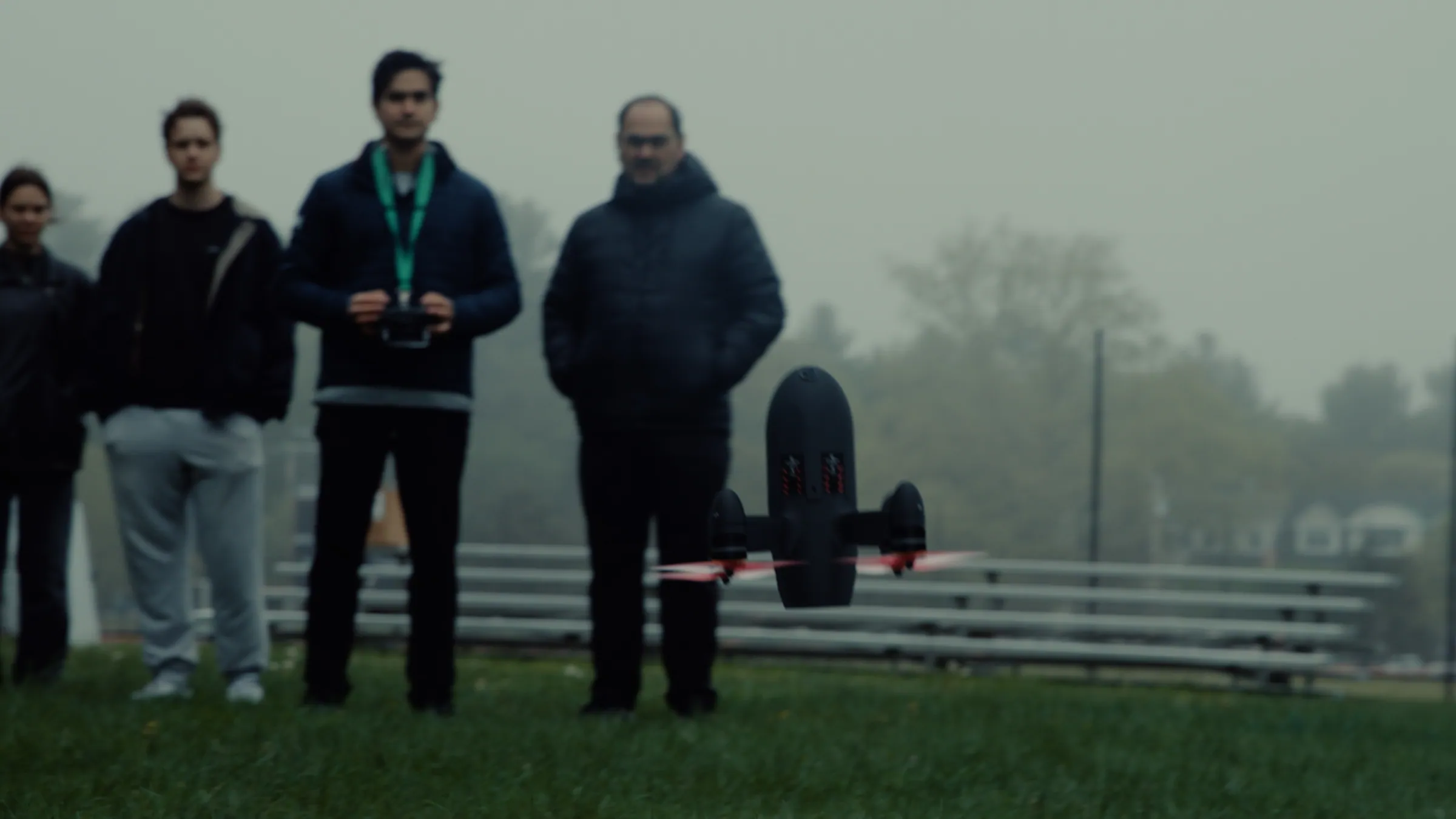
The V2 high-speed drone hovering in front of the team on a misty field
V1Capstone, 2024
Lost to an ESC fire at 302 km/h

This was my capstone at Northeastern, and the idea was mine. We designed the elliptical shell with CFD and wind tunnel tests, using dimensional analysis to compare the two, and added NACA ducts to keep the electronics cool. The drag coefficient came out at 0.19. On the second speed run it hit 302 km/h at 80% throttle, and then an ESC caught fire. We still won Best Capstone Project.
V2With my brother and dad
Lost the link at speed

The first one we built on our own after graduating. It flew well and looked amazing, right up until we lost the radio link at high speed.

V3
Passed 400 km/h

V3 broke our records and got us past the 400 km/h target. We lost it after its last flight because of a bad battery.

V4
Past 500 km/h and still flying

V4 got past 500 km/h, and it’s the one we actually use. We’ve flown it a lot and filmed with it. It’s stable and reliable, and it’s where I did most of the CFD on drag and wings.

V5
Not flown yet

V5 has custom motors with a custom KV, built to go well past 500 km/h. It’s finished and waiting for its first flight.

Stills

V2 flight day

Less drag on V4

Going from a blunt end to a tapered one cut drag from 37.0 N to 34.3 N at 400 km/h, about 7% less. Using frontal area, the drag coefficient went from 0.27 to 0.25. There’s more of this in the Aero lab.

Tuning

At these speeds the tune matters as much as the frame. I go through the Betaflight and PX4 logs to look at vibration, compare it with the modal analysis, put notch filters on the real resonances, and tune the PIDs from flight data.

Press

In the news

news.northeastern.edu/2025/01/23/indycar-drone-filming-technologyOpen

Northeastern Global News · Science & Technology

Northeastern engineering students design drone for high-speed IndyCar filming

By Cesareo Contreras · January 23, 2025

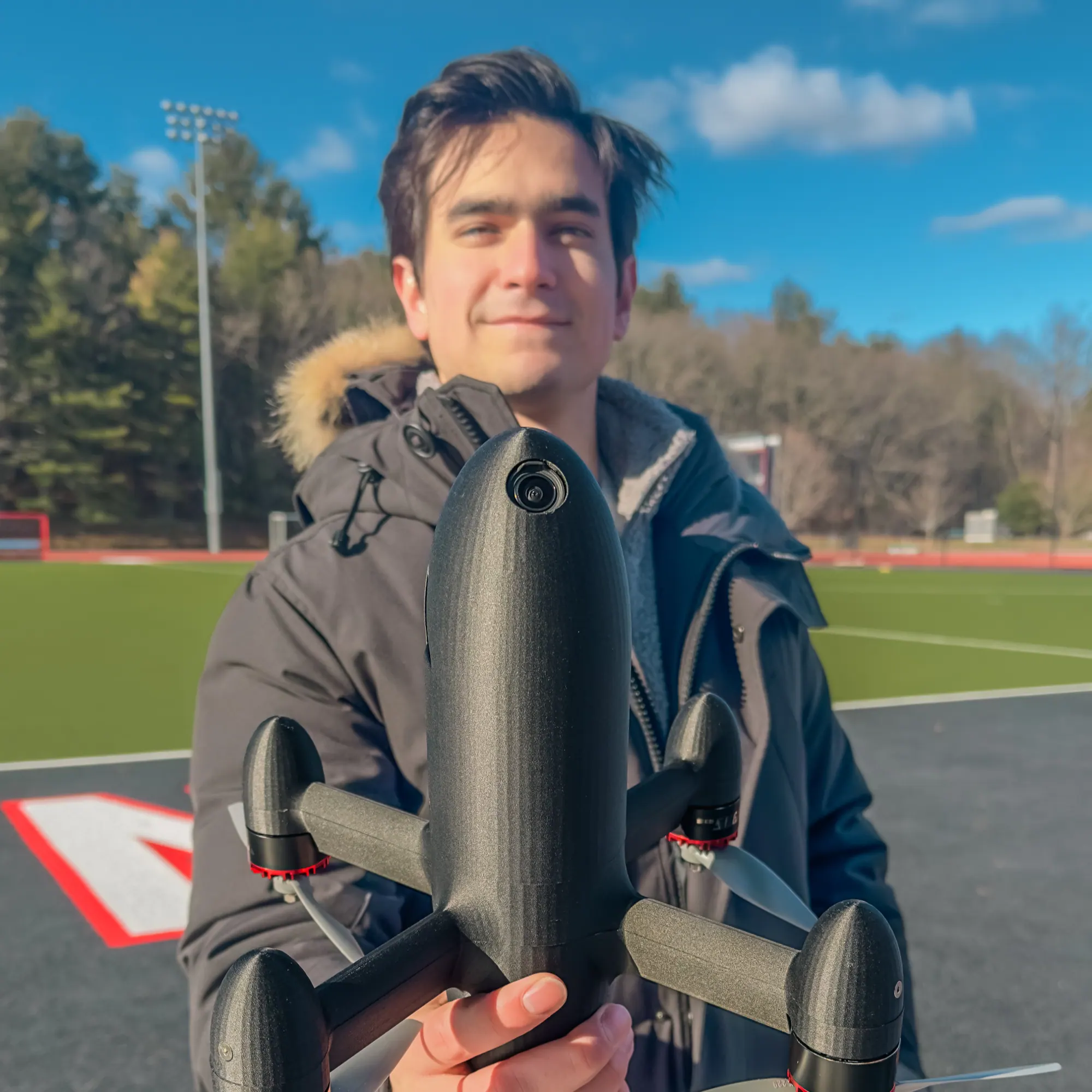
David holding the capstone high-speed drone

A group of Northeastern mechanical engineering seniors built a high-speed first-person-view drone designed to follow IndyCar race cars, as their senior capstone.

“The idea was the brainchild of Northeastern graduate David Lobo.”

Today, IndyCar footage comes from stationary cameras that can only track a car for a few seconds, or onboard cameras whose view is often blocked by the car itself. The team’s drone had reached about 302 km/h, with 400 km/h as the target.

The design borrowed ideas from Red Bull’s F1 drone and the record-holding Peregrine 2, and uses NACA duct vents to keep the electronics from overheating.

“What I love most about drones is how they bring together my three favorite things: engineering, flight and videography.”
David Lobo

Read the full article on Northeastern Global News